Interesting. Sign of things to come to be sure.
4 Likes
Not sure that doing that so close to April 1st was the best of ideas.
Or, maybe that was the point.
8 Likes
Which classic characters do we think will appear? M, of course. Moneypenny, Q, Felix Leiter? A reappearance by a supporting ally?
2 Likes
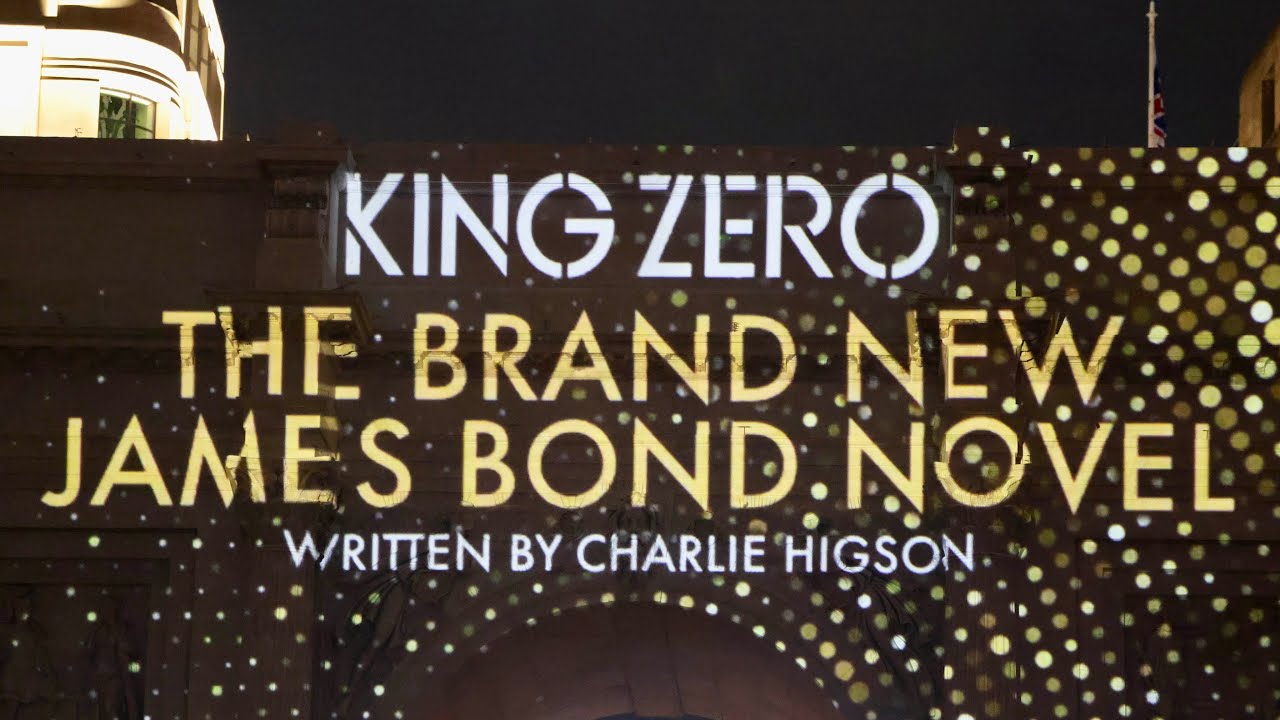
I suppose this is one of the influencers mentioned. Hadn’t seen the video but Charlie reveals the structure of the book, as well as its main locations. Sounding cool!
5 Likes
Let it be known there’s actually a lot of worthy Bond content to be enjoyed that isn’t Fleming. Colonel Sun is often called the best continuation novel and I think that historical reputation still has merit. I really like it, and personally have no problem adding it to the end of the Fleming run. So I definitely recommend that one.
I also rank The Authorised Biography of 007 highly. I don’t consider it canon but I don’t think that matters. It’s a solid read and an interesting concept unlike any of the other books. Horowitz didn’t put a foot wrong with his three - my only complaint is wanting With A Mind To Kill to be longer.
Oh for sure!
I’ve read pretty much every Bond continuation novel/spinoff since Devil May Care (except the Q book, so far). I’ve also read a lot of the Gardner books.
The Benson books, Colonel Sun, and the Authorized Biography are on my bucket list, be rest assured 
6 Likes
M and Moneypenny for sure of course. They’re an integral part of the Bond formula, on page and screen.
Q is trickier. I think there’s a pretty good chance Major Boothroyd shows up, as does Q Branch, but will Boothroyd be playing the character called “Q”? Because Q is owned by EON (and now Amazon I suppose) and there have been issues with using him in the continuation novels (then again, there’s the “Q Mysteries” series now, so I suppose that’s sorted?)
Felix is possible certainly, but not necessary. Depends on if he/the CIA have a role to play in the plot.
What I’m curious about is which M are we getting? Sir Miles Messervy? Or someone else? If this is set in the same continuity as Sherwood’s trilogy, then, depending on how things pan out in Hurricane Room, we could get either Sir Emery Ware or Moneypenny herself as M! (But I think that’s unlikely).
Likewise for Q I suppose, if he’s not Boothroyd.
5 Likes
Some interesting details about the book from the interview with Charlie:
- He’s trying to “bring together the cinematic Bond and the world of Fleming”. He decided to do a contemporary Bond novel because he felt that, while the recent period pieces have been great, most people know Bond from the films and thus expect a modern Bond.
- King Zero is the name of the villain. He wanted to go back to using villain names as the title rather than naming the book something like “Tomorrow Never Dies Again Yesterday”

- The book is split into three sections, each set in a different location. The first section is set in Saudi, the second in the Maldives (where the sharks depicted on the cover will appear!) and the third in the forests of the Congo.
- Perhaps the most important detail from the whole continuity/timeline perspective - Bond is a “35 year old trying to navigate the modern world.” So it’s definitely not set in the same universe as the Sherwood Double O books.
9 Likes
Could technically be Higson’s version of Bond from On His Majesty’s Secret Service. Bond’s age and status aren’t mentioned explicitly - I think - but that would likely tally with the general mindset of the piece, Bond in the here and now, in good form and dealing with current events.
9 Likes
Its made me start reading his two short stories. Occured to me i hadnt read his young Bond short despite having read, and enjoyed, the rest of his Bond work
3 Likes
Earlier in this thread, Tiin007 mentioned that Carte Blanche was “the biggest missed opportunity of the (literary) franchise”. As I said later, that I didn’t know that it was per se, but one big opportunity that the literary franchise missed that really bugged me then and still does today goes back to 2012.
That was the year of the London Summer Olympics and I think under such a scenario that it would have been great to have a James Bond mission involving the Olympic Games where he ultimately discovers that he must stop the bad guy from detonating a nuclear bomb or assassinating UK leaders at the world’s biggest event during the opening ceremonies perhaps timed to coincide with the lighting of the Olympic flame.
I think it would have been a nice, timely story sort of like the Hong Kong handover to China was in 1997 and, with the Olympic backdrop, would have been exciting and different. I suppose such a story could still happen, but it will be a long time before it returns to London.
6 Likes
Thing is, these particular landmark occasions are on the one side comparatively rare and date a story, book or film not always in a good way. I suspect few readers even remember that Zero Minus Ten was supposed to revolve around the Hong Kong handover or Clancy’s Rainbow Six around the 2000 Olympic Games in Sidney. The idea is intriguing in the buildup to such events - but it quickly fades into obscurity once it’s over.
That’s not even a fault of the respective books but simply how we look at events that have turned into ‘history’ - regardless of their import and consequence they had in the moment, or continue to have on our daily lives. For example, people born in 2001 are turning 25 this year, a whole generation of lives around the globe who never experienced a world ‘before’ 9/11. They naturally have difficulty understanding what life used to be in that distant past, just as 25 years from today a large number of folks will fail to grasp current events and concerns.
I suppose whenever a writer uses such a landmark event set in the future they risk their tale becoming yesterday’s newspaper the moment the event arrives. It might still be interesting afterwards, but not nearly as much as it was when it - whatever ‘it’ happens to be - had yet to happen.
4 Likes
True, and I wouldn’t want to make a regular habit out of such things, but there are some events that are so unique and so special that they–maybe not deserve but–justify the working of a story around them. And I think that the Summer Olympic Games held in London in 2012 was one such event–and in the 50th year of the cinematic 007 at that. (59 for the literary Bond.)
3 Likes
It all sounds jolly good.
9 Likes
IFP’s most recent info…
The Briefing: Rediscover The Facts of Death

# THE
BRIEFING
20th April 2026
THIS EDITION
- The return of Raymond Benson’s fan-favourite 007 novel
- Operation Mincemeat reimagined in April’s Book Club
- The Ian Fleming Steel Dagger longlist is here
- New drops at the shop
- Events to book in May

The numbers don’t lie.
This summer, step into the world of the Decada with a new paperback edition of Raymond Benson’s 007 adventure, complete with an exclusive introduction from the author. Pre-order yours now at our shop.
READ MORE

# YOUR APRIL
MUST-READ
This month’s James Bond Book Club pick is Operation Heartbreak by Alfred Duff. An elegiac reimagining of Operation Mincemeat, first published in 1950, the book explores what it means to feel out of place in a changing world. Listen to the beginning of the story here.
DISCOVER MORE

POSITIVELY THRILLING
Looking for the best in new espionage, noir and adventure thrillers? Look no further. The longlist for the 2026 Ian Fleming Steel Dagger Award has just been announced.
Awarded by the Crime Writers Association, and sponsored by Ian Fleming Publications, this year’s twelve Steel Dagger books all bring something new to the genre.
EXPLORE THE LIST

# WHAT’S NEW?
Just arrived at our shop…
The Double O Cocktail Journal - the new Bond bar essential, a hand-bound book to record your recipes and preferences.
The Double O Notes - a hand-bound embossed notebook in leather and buckram, in two colours.
SHOP NOW
DIARY DATES
In the UK? Some May events to catch:
19th Kim Sherwood launches Hurricane Room at Topping & Company Booksellers,Edinburgh, Scotland – 6.30pm
23rd Vaseem Khan, Kim Sherwood and actress Genevieve Gaunt talk Bond and Q at the Bath Literature Festival, Bath – 5pm
26th Vaseem Khan and Kim Sherwood talk Bond and Q with Ava Glass at the Hay Festival, Hay-on-Wye, Wales – 7pm

2 Likes
Again, time for the IFP newsletter…
# THE
BRIEFING
15th May 2026
THIS EDITION
- Enter the Hurricane Room
- Vote for Q
- Explore a sun-soaked haven for former spies in May’s Book Club
- Shop news
- What you need to know this week

Hurricane Room is nearly here
The explosive finale to Kim Sherwood’s thrilling Double O trilogy, Hurricane Room, hits shelves next week - on the 19th in the US, and the 21st in the UK.
Kim is launching the book live online herewith Murder By The Book at 2pm CT/3pm ET/8pm BST on 18th May, and at Waterstones Piccadilly in London on the 20th. She’ll be appearing at a number of other events around the UK, check them out and grab your ticket via our events page.
LEARN MORE

# VOTE FOR Q
Quantum of Menace is out now in paperback - perfect if you’ve yet to read it!
It’s also in the running for two awards - the Theakston Old Peculier Crime Novel of the Year and the Capital Crime Fingerprint Award for Overall Crime Book of the Year - you can vote for both now.
UK readers can get 20% off pre-orders of the sequel, The Man with the Golden Compass , from bookshop.org with the code PREORDER20 until midnight on 17th May.
GET YOUR COPY
MURDER IN PARADISE?
This month’s James Bond Book Club pick is A Stranger in Corfu by Alex Preston.
On a remote island off Corfu lives a quiet community of exiled spies, where old loyalties still linger and nothing is as settled as it seems. When a resident is found dead, the island’s calm begins to slip, and the past starts to reassert itself...
READ MORE


# TAKE NOTE
Now at our shop, with global shipping… Handbound English notebooks in leather and heritage buckram. Socks embroidered with the Bond family crest. Numbered artwork and photography. Pre-orders and new books… and next week a fresh drop of signed special editions.
TAKE A LOOK
NEED TO KNOW
Need some cocktail inspiration for the warmer weather? Discover Fleming’s ‘explosive’ recipe for ‘Old Man’s Thing’ here.
Explore events taking place over the summer on our website here.
Our three part series on the Formation, Missions and Legacy of 30AU, the Special Intelligence Assault Unit formed by Ian Fleming during WW2, is now complete. Catch up here: Part 1, Part 2, Part 3.


EXPLORE IANFLEMING.COM
4 Likes
A Stranger in Corfu is very good indeed.
3 Likes
Behind a paywall, but the headline is…
Lee Child turned down chance to write new James Bond books
Novelist behind Jack Reacher says of 007: ‘I didn’t love the people, they were a bit uptight and Bond is so specifically 1950s: it wouldn’t work today’
6 Likes
Not sure if this is really news i.e. a fresh approach or merely re-reporting of the earlier approach. I seem to recall they - IFP - supposedly have been knocking at his door twice already. Would it really make sense to ask him a third time now that he officially handed Reacher to his brother?
5 Likes
I’ve read this, before too. I think it might be mentioned in the most recent book he put out, simply called Reacher, which is basically a collection of very short making-of essays for each of the books. If memory serves I think he also took issue with the pay arrangements if he were to say yes. At any rate, I love Reacher, but I don’t need Lee Child’s take on Bond. I’d prefer he go back to writing Reacher. He’s missed.
3 Likes
Anybody who does not want to do it should not do it.
8 Likes