Everything Right With Diamonds Are Forever

Some exceedingly interesting information on the script history of Diamonds Are Forever

A fellow named Tom Mason managed to read Richard Maibaum’s early treatments of the film and has discussed them on the Licence to Queer podcast:
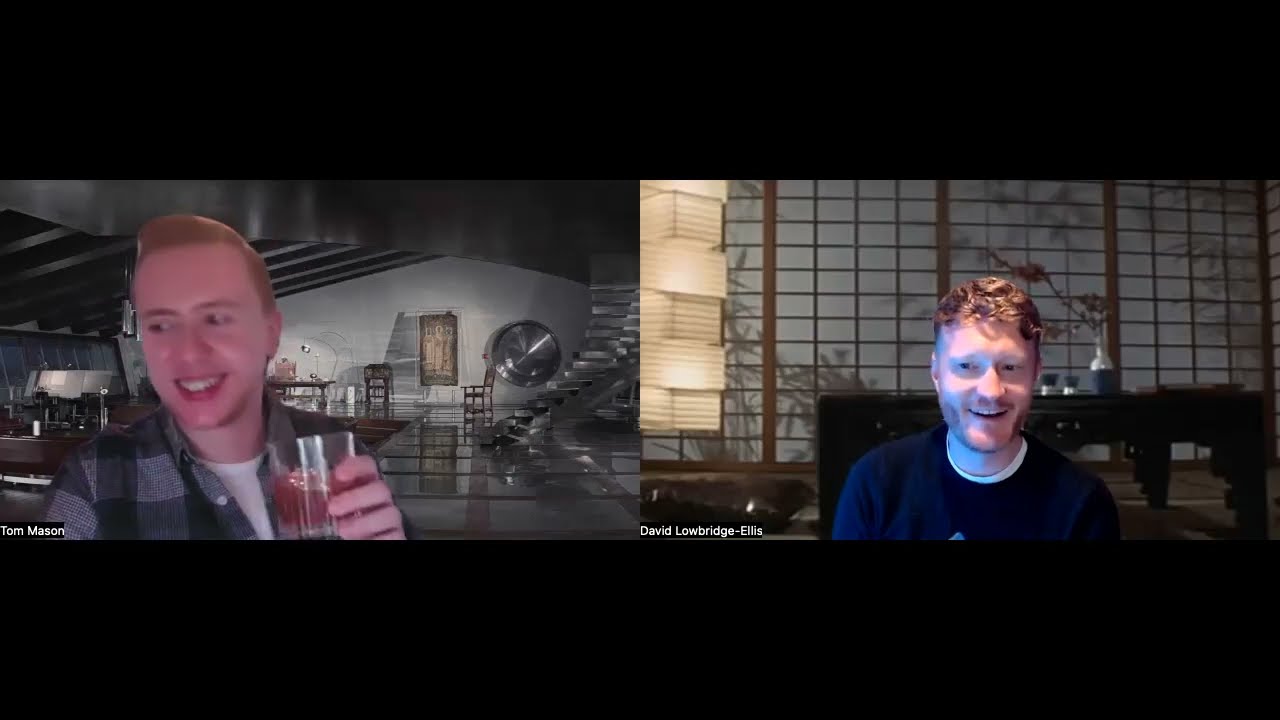
For the benefit of those who digest information faster by reading than listening, here’s the interesting stuff:

All three Maibaum treatments open with Bond depressed and reeling from the death of Tracy. In the first treatment we’re even told that Bond has been to a psychiatrist. The first two treatments open with Bond walking his dog on a desolate moor, possibly Scotland or Suffolk. He’s described as living like a hermit and has a framed photo of Tracy in his house, which we see as melancholic instrumental of “We Have All the Time in the World” plays. While Bond is out walking a voluptuous skydiver drops from the heavens and reveals herself as Tiffany Case.

The pre-title sequences of all three treatments feature an attack by Irma Bundt. In the first treatment there’s a long chase sequence with Bond on a motorcycle being chased by someone in a land rover. It crashes and Bond discovers the driver is Irma Bundt, disguised as a man and with diamonds on her person. The third treatment forgoes the moor setting and features a chase on the London Underground.

The third treatment shows a girl named Sandra breaking into Bond’s house and hints that Bond is not able to “perform” as he usually does. All three treatments hint that Bond is so depressed he’s less interested in sex; he doesn’t flirt with Moneypenny in the first treatment, though he sleeps with Tiffany a few pages later.

The treatments were likely written with Lazenby in mind. Only one has a date–October '69, a few months before the premiere of OHMSS. Locations differ in each treatment; the second treatment has a sequence in Barcelona, with a chase through Parc Güell, but most of the action is set in Bangkok. There’s also protracted sequence in Bond’s home, described as a mews house in Chelsea, where Bond and Tiffany are attacked by several goons. The third treatment is partially set in India and features an Oxford-educated field agent described as a “brown-skinned day David McCallum.” None of the treatments is set in Las Vegas!

In an echo from the Fleming novel Rufus B. Saye runs a diamond shop, though he’s now a Spectre agent and appears in a six-person group meeting. The third treatment has M sending Moneypenny on a mission in the field, and there’s an uncharacteristic scene of her being prudish around erotic carvings. Later on M is captured and held hostage by Blofeld in a hippie colony!

Q also goes into the field. In the first two treatments Bond takes the diamonds found on Bundt to Q for verification and sourcing. Afterwards Q is seen carrying a briefcase full of diamonds while Bond carries a similar one for paperwork. Bond swaps the briefcases and steals the diamonds.

In the second treatment M believes Bond has gone insane and sends 006 and 008 to capture him. When they find out Bond is on the level they team up with him for the final assault on Spectre. In the third treatment Bond joins Spectre, which accepts him after 006 and 008 make an attempt on his life. Bond and another Spectre agent then join forces to overthrow Blofeld.

Marc-Ange Draco returns in all three treatments. He has retired from the Union Corse and is living in an estate with Che Che, Toussaint, and Rafael as his butlers and valets. They’ve grown sick of civilian life, so when Bond reappears they’re eager to help him. In the first two treatments Draco is dramatically revealed at the end of the first act; in the third he’s randomly on the phone with Bond in the pre-titles. Draco is killed by an elephant stampede in the third treatment.

Wint & Kidd appear and are referred to in the treatments as “two American f*gs”; Wint is described as looking like Terence Stamp. There is less affection between them than in the film, though in the third treatment Wint comforts Kidd, who is afraid of flying.

The third treatment includes Tiffany’s gang rape backstory from the novel, but “amped up” and somehow dramatized. The second treatment also has a sequence, after the diamonds have been evaluated, where Bond follows Tiffany to a restaurant and sits down with her. They have a conversation where he implies he knows what she’s doing and fakes being drunk.

Maibaum was “utterly obsessed” with Blofeld being in a neck brace in all of the treatments. In all of them Blofeld tears the brace off “like a wild animal” before engaging Bond in a fist fight. In the second treatment Blofeld is killed by a tiger, which Maibaum calls poetic irony since Ernst likes cats. In the third treatment Blofeld is killed by six white kittens that Bond has somehow learned to command and sic on their owner. And in a later script (not a treatment) Bond and Tiffany find themselves in an escape pod with Wint, Kidd and Blofeld; they eject the bad guys, who are eaten by sharks.

All of the treatments have a shipboard sequence where Wint and Kidd come in as waiters and tell Bond he has a phone call. After he leaves they try to kill Tiffany with boiling oil. As in the novel, Bond abseils the outside of the ship and enters through the porthole.

11 Likes

This is a fascinating read and watch! Thank you

1 Like

I came across this article, and had to share it with my fellow DAF aficionados, toleraters, and haters:

4 Likes

Fascinating read, thank you

1 Like

You are most welcome. It was some of the offhand/side comments that I found most intriguing.

Hamilton takes us through a series of increasingly sublime set pieces that collectively pave the way for the more impressionistic narratives of the Roger Moore era.

…Hamilton now parlays into a vision of Las Vegas at its most hyperreal and postmodern. We first approach Vegas via a garish funeral parlour – Slumber Inc. – that’s decked out with psychedelic stained glass, piped-in music, and an electronic deck to coordinate cremation. It all looks like an eccentric music studio, or a futuristic performance space, rather than a funeral parlour, setting the stage for a plethora of Las Vegas buildings, interiors and neon nightscapes.

the only way the film can process [the narrative] is as a variety show

(Shades of Jim’s mockumentary)

the film, which unfolds against a series of simulations that…reframe the world as spectacle.

a new quality emerges in the franchise – a vaudevillian technological spectacle that’s equal parts futuristic and old-fashioned, much as Roger Moore would turn out to be both more debonair and lascivious than Connery’s Bond.

the hotel takes Bond into a space of total simulation – a room entirely comprised of screens, a pair of Blofeld clones, and their weapon par resistance, a “voicebox” that allows them to replicate, remix and repurpose other voices, including that of Bond…you sense an incipient remix culture here, and a new plasticity to the franchise

(Shades of Dustin’s Bond Film Toolkit being opened up. We have all pieces we need–narratively, visually, sonically. Let’s dial up the Garden of Death, and mix in “We Have All the Time in the World.” The genius of the Bond Franchise Remix.

And where Blofeld was played by different actors in the past, he’s now synonymous with performativity itself, appearing, at one point, in drag, as if channelling Liberace and the camp heritage of Las Vegas.

…Bond has been entirely subsumed into spectacle, so it barely matters that Connery is haggard, overweight, disinterested and downright ugly for long stretches of the action. For all its opening anxieties about continuity, Diamonds Are Forever finally realises that we don’t need Connery for Bond to survive – and in the process it traverses the need for any single specific Bond, envisaging the franchise as the exercise in spectacle it would become in the Moore era.

(Even a tidbit for the DAF haters.)

3 Likes

What always sits at the back of my mind when watching DAF is that this is the Las Vegas of Hunter Thompson’s Fear and Loathing in Las Vegas.

5 Likes

Wow! That was a interesting read! I love DAF by the way!
What the writer does overlook is that although he mentions the name SPECTRE a number of times, this name does not appear anywhere in the film itself: it is not mentioned, it is not visible anywhere, nor are the usual employees, who are on guard everywhere . Actually, Blofeld’s group of employees seems to consist of only a handful this time. This is a notable difference with, for example, YOLT and OHMSS.

4 Likes

Perhaps this has something to do with wanting to avoid some legal problems. Does anyone know this?

2 Likes

Thank you for this. It is so good. Both book and film as ruminations on the end of the 1960’s, with DAF also serving as a preview of what comes next.

So now, less than five years later, you can go up on a steep hill in Las Vegas and look West, and with the right kind of eyes you can almost see the high-water mark—that place where the wave finally broke and rolled back.

image

Not a shot from the film itself, but you all know what image I am referring to (I write about it often enough LOL).

I wonder if Hunter Thompson and Team Bond were ever in Las Vegas at the same time?

I do not know if there was a legal problem with using the name. The greater Bondians here will tell us.

I always looked at the absence of SPECTRE branding as indicative of the fact that Willard Whyte’s empire could serve Blofeld’s purposes as well as (if not better than) SPECTRE ever could. Both are criminal enterprises in pursuit of profit, and both possess the potential to cause much havoc for many people. It goes unstated, but the majority of WWE’s employees are not aware of the fact that they are now working for Blofeld, and he build/buys an oil rig, and launches a satellite equipped with a laser gun with their help, and no questions are asked (even the federal government assists with the satellite launch). We are all Klaus Hergesheimers now.

4 Likes

Conneys performance in DAF, is a performance of real balance. He is spoofing his own earlier performances and critiquing Vegas itself, to a greater extent consumerism and the nature of being a film star. It’s Bound as Cary Grant in essence.
It’s interesting to read the postmodern angle, as the performance is Post Modern itself.
Fascinating article.

2 Likes

Making up for his previous job action performance.

Rising up from the ocean in the cage, and lounging in the corner as if he is stopping by for drinks and a chat.

Coming out of the silver ball in the immaculate suit is an echo of him coming out of the wetsuit at the beginning of GOLDFINGER.

UKN007’s insight about “Fear and Loathing” is still racing through my mind. It’s gonzo journalism meets gonzo cinema.

https://gonzo-studies.org/what-is-gonzo/

Qualities of Gonzo:

  • Subjectivity
  • Immediacy (using notes, transcripts, etc)
  • A blend of fact and fiction
  • Dark comedy
  • A peculiar lexis
  • Some kind of sidekick figure
  • Hyperbole and/or fantasy
  • Drug use
  • Violence
  • Digressions
  • Conspiratorial tone

Is there a more peculiar lexis than the pink tie and migrating toupee?

3 Likes

I have to admit that I was never a big fan of Diamonds Are Forever. I saw it at an opening weekend Saturday matinee with my Dad. He pronounced that Bond had gone “comedy” and lost his edge and that affected my 9-year old perspective I imagine. Throughout the years I kept it at a distance. When TBS ran their Bond marathons here in the states, I would still record a new VHS copy of it (along with everything else) but did it more for completion’s sake than for viewing. In the 90s I dutifully bought the DVD. It still sits on my shelf in its original plastic.

So, imagine my surprise when I began reading the raves for the film by our own @MrKiddWint , gushing over its genius and raving over its subtleties and nuanced layers. “But it has the pink tie,” I yelled back internally! “It’s light and frivolous! And Dad (God rest his soul) didn’t like it!”

Last week I developed a pretty severe sinus infection. By midweek I was running high fevers and coughing like a madman. I’ve never been able to watch TV or read with a fever (makes for a most boring predicament). On top of that, soon after, my wife came down with the flu. All Christmas plans involving family were of necessity canceled and my wife and I were relegated to different bedrooms on different floors of the house. My fever finally broke a couple of days ago and some level of normalcy returned; I decided to watch TV. My holiday had been destroyed. I needed some comfort food. I would watch a classic Bond movie.

As I scrolled through the various 4K version available on Amazon Prime I kept coming back to Diamonds Are Forever. Would I see it differently now through the lens of @MrKiddWint’s observations? In the end I chose it because I realized I have it less memorized than any other film in the franchise and it would guarantee the freshest experience.

In short, it was a totally unexpected revelation! On a surface level alone, I flat-out enjoyed it like never before. I found the twists and turns intriguing. I found the humor eliciting actual chuckles. I found its supporting characters a wonderful mix of eccentrics. I still find the climax a bit rushed and dare I say, anti-climactic, but it’s all so day-glow bright and colorful. And Connery may look older and a little out of shape than when we last saw him, but he’s got a spirit in him that’s sassy and, as @MrKiddWint suggests, conspiratorial—he’s deep inside on a joke and is sardonically grinning his way through the entire film as he both celebrates and skewers the tropes that he helped to create over the previous decade.

All in all a thoroughly satisfying romp and in the end, a transcendent experience that I have given too little serious attention to for far too long. I am glad to have corrected that. Reevaluation is good and intellectually stimulating. Even for our favorite spy in the tux with a martini. Long live James Bond!

11 Likes

First: I am sorry for your illnesses, but that glad you are recovered.

Second: Stbernard and others also deserve credit for their championing of DAF’s genius, and helping me to see the film with greater depth.

Third: I am verklempt.

image

7 Likes

Yes, apologies to anyone else whose insights played a part in my reevaluation viewing. Kudos to you all!

4 Likes

IMG_0062

5 Likes

Hahahahhahahahahhaha

1 Like

Duality, consumerism, big corporation taking over politics, the zombie as tourist, contextually it’s the deepest of Connerys Bond films.
There are little things that always catch me… The pane of glass breaking before the fight starts, signifying this is fantasy.

4 Likes

Inspired by Yellow-Pinky, I re-watched DAF this afternoon (I know–as if I need external motivation). I watched the film on a computer monitor, which lessened the impact in some ways, but allowed for a more critical eye to be engaged (not my original observation. It comes from Godard, who said one experienced a film in a movie theater, and studied it on television. As ever, Jean-Luc got it right).

Small observations:

Why does Morton Slumber invite Bond/Franks into his “comfortable” office? A lovely verbal touch alongside his praising of Bond/Franks’ casket selection. Slumber is committed to his role as mortician, even if it is a performance that is completely unnecessary. Gangster as Method actor.

Then the brief awkward silence until the diamonds are brought in–faster than any human body could be cremated, and the jewels separated from the ashes–as if the filmmakers could not be bothered with inventing something to bridge the time.

As I have been composing this post, I see @Stbernard’s: The pane of glass breaking before the fight starts, signifying this is fantasy. Same with the bringing in of the diamonds. It occurs in less time than Bond spends in the casket in the furnace. In real time, Bond would have been toast, but we are on Bond Time.

In addition to Bond Time, DAF follows Bond Logic. The editing/transitions move viewers swiftly along, e.g., Bond asks Tiffany “Where’s the stuff?”, and the film cuts to a porter placing the stuffed animal in a case. No muss, no fuss–like Bond watching Goldfinger’s Rolls-Royce being put on a plane, followed by a cut to Bond with his Aston Martin on a road in Switzerland. Have a major fight with a henchman while carrying a glass vial of of poisonous gas in your pocket? Relax. It ain’t gonna break.

“Professor Doctor Metz.” Really letting Bond/Hergersheimer know who he is. Also allows the audience know what Metz thinks of himself.

Many times the camera pans from one action in a scene to pick up on another one (no cuts involved), e.g.:

  1. panning from Kidd/Wint photographing the canal to Bond/Franks driving to Tiffany’s place
  2. moving from one of the acts in Circus Circus to Tiffany moving through the space or to Bond and Felix observing the scene
  3. panning down from Bond and Tiffany on deck ready to sail to Wint/Kidd at the portholes of their cabin
  4. (my favorite) a right to left pan from Bond/Hergersheimer exiting through one door, to the actual Hergersheimer entering through another one.

The actor on the left in the laboratory scene giving a small smile as Metz and Bond/Hergersheimer square off. Is it in character, or is he just delighted to be in a Bond film?

More Method: the actors playing astronauts stay in character as Bond enters the moon landscape. They continue to move as if they were on the moon, thereby, offering no resistance to Bond. Maintaining The Method to keep the fraud going, even as an interloper destroys it.

The chandelier in the bridal suite is a larger version of the one in Tiffany’s apartment where the diamonds are hidden.

“Felix, this is not the real White House.” Another masquerade.

Another doubling: Bond at the controls of the moon buggy, and then the crane.

Q’s tie being dangerously short in Vegas. Is it an MI6 thing?

The Spectre symbol at the front of the bathosub. Never saw it before.

On this Boxing Day, I gift everyone a radiation shield (an example of which I highly endorse going into the time capsule as well).

6 Likes

Method or an extension of the roles we have to play in order to perpetuate the consumer society.

2 Likes

Your comment set off some thoughts about narrative actions that must occur off-camera:

Franks’ body serving as the method of transit for the diamonds is happenstance. He escaped the authorities, and made his way to Amsterdam, where Bond kills him to prevent his own imposture from being revealed.

In the moment, Bond decides to use Franks’ body. MI6, and possibly Q, get involved, and load a cache of phony diamonds into Franks’ body. Tiffany tells her handlers that this is how delivery will be managed, and they send a mortuary team to meet Bond/Franks, with the implication being that Slumber, Inc is another business associated with Spectre/Whyte Enterprises.

So whatever day job we have, the company we work for may be linked to a larger criminal enterprise, of which we may, or may not, be aware. Morton Slumber continues to play his role as mortician, even when his company is being used, as in this case, for criminal purposes. So the roles, you note, we play to perpetuate consumer society, also perpetuate the criminal enterprise underlying consumer society (which some people might regard as a criminal enterprise unto itself).

Random fact: David Bauer who plays Morton Slumber was blacklisted, and moved to Great Britain to continue to work. “David Bauer” was his second name change, having been born Herman Bernard Waldman, and then acting under the name David Wolfe, adopting Bauer after appearing before HUAC, and his subsequent blacklisting.

4 Likes