Ripley Under Ground (1970) by Patricia Highsmith
The second novel in the Ripliad, Tom Ripley is comfortably ensconced at Belle Ombre with Heloise, Mme Annette, his gardening, his language studies, and his money. This is a novel about forgery, fakery, impersonation, and the tenuous line between the real and the imaginary.
Highsmith’s prose remains remarkable–precise, smooth–flat even, and evocative. I turned the pages to find out what happened (memory fades), but also to savor another Highsmith sentence/paragraph.
Reading about Tom Ripley in the 21st century is most interesting. While still a sociopath, Tom seems less of an outlier than he used to. Maybe Highsmith was an unacknowledged futurist–not just a crime novelist, but science fiction writer as well, chronicling the world to come.
The Talented Mr. Ripley (1955) by Patricia Highsmith
The novel that launched the Ripliad, and still a wonderful read, even when one knows what happens. One thing I find amazing (among many things) is how Highsmith is so completely Highsmith at this early point of her career. The rhythm and cadence of her prose. Her ability to amass small details into a comprehensive portrait. The sly seduction that gets a reader (well, at least this reader) on Ripley’s side.
Slavoj Zizek says that Highsmith was a master of not only telling stories, but, more crucially, of telling how stories go wrong. Despite knowing what was going to happen, I still felt a supreme thrill of pleasure when
Summary
Tom succeeds in his plan, when the Italian police mistakenly take his fingerprints found in “Dickie’s” Rome apartment as being Dickie’s, which then match his/Tom’s fingerprints all over Dickie’s luggage/items checked by Tom into Venice American Express.
It is such an elegant coup de narrative–in front of the reader the entire time–but still it appears to come out of the blue. As fine in parts as the films/series based on the novel are, they reduce Ripley, having him caught (or implying that he will be), rather than allowing him to get away with murders that he really did not want to commit. If only Dickie had let him ride shotgun in his life for the rest of his days, none of this would have ever happened.
Deep Water (1957) by Patricia Highsmith
Her next work after TTMR, this novel finds Highsmith exploring Cheever country (it is published the same year as Cheever’s The Wapshot Chronicle, and both are set in Massachusetts, and involve deep waters).
Highsmith is more clinical in her analysis than Cheever, and her prose more restrained, but both writers examine mid-century American life, and find it wanting (though Cheever, as is his want, is a little more optimistic).
Highsmith explores the discontents of middle class life, and calmly, coolly, shows how they can suddenly explode. She scrambles gender roles in the process, and even more than in the Ripley novels (at least for me) creates sympathy for all her characters. An amazing novel. I see why some people consider it her best.
You may be interested in this article, @MrKiddWint
First, thanks to Dustin for the article.
Second: Those Who Walk Away (1967) by Patricia Highsmith
A novel about one of Highsmith’s doomed, entangled pairings–Ripley & Dickie or Guy & Charles (Bruno in the Hitchcock film).
She starts out exclusively from Ray Garrett’s perspective (wife has just committed suicide), and then switches to Ed Coleman’s (father of the dead woman, and none too pleased with his son-in-law, and looking for revenge. He shoots Ray in the first chapter, but non-fatally).
A story about trauma, healing, friendship, attempts to make others understand, and those who refuse to do so, TWWA is one of the subtlest psychological thrillers I have ever read.
Highsmith knew exactly how long to stay with each character’s perspective. Through the slow and precise accumulation of details, she illuminated the psychology of her two protagonists, as well as the supporting players. I was driven to turn the pages not just to find out what happened on a plot level, but to watch the psychological evolution of one character, the stasis of the other, and the consequences of their game of pursuit/avoidance (which inverts in the last third of the novel). I can see why filmmakers love to adapt her work–the plotting is amazing. But what makes her extraordinary (and is never captured on screen) is her marriage of intricate plotting with psychological revelation.
Fascinating and sui generis. Now back to Ripley.
I listened to this during a long car ride. I really like it, it’s the first Bond novel that I reread or in this case, listened to. While not a complete BBC Radio adaptation, I feel that this should be partly considered one.
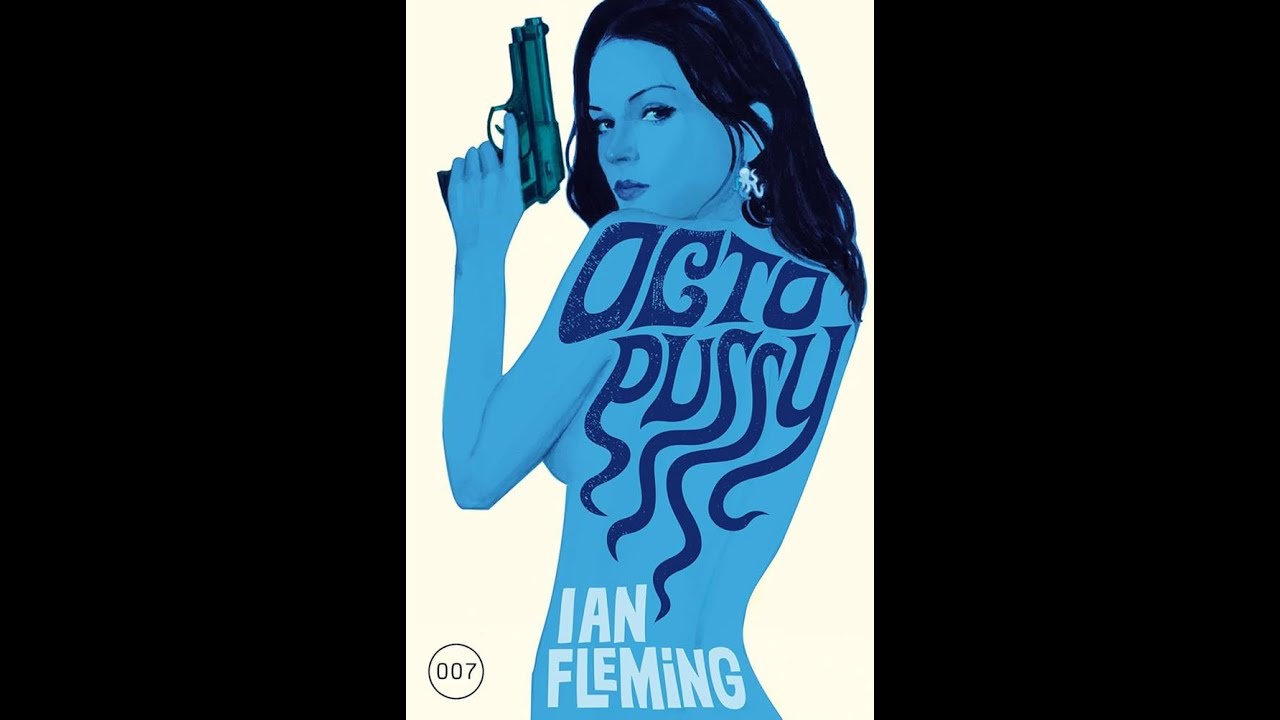
I listened to Octopussy and the Living Daylights (full version) on another long car ride. Tom Hiddleston and Lucy Fleming are great narrators, even if I’m not the biggest fan of all the short stories. My favorite short story of the bunch is probably The Living Daylights, as it has a great buildup to its climax. Octopussy and The Property of a Lady went on a bit too long for me. Too much not needed details leading up to their climaxes. 007 in New York is a quick thriller that is great when you want to fall asleep after you read it for light excitement. I generally prefer the For Your Eyes Only short story collection more, but these were decent stories for Fleming to go out on.
Ripley’s Game (1974)
Fours years (six months in narrative time) after Ripley Under Ground, Highsmith returned to Ripley, and paired him with Jonathan Trevanny, who slights Ripley (or at least Ripley thinks so) at a party, setting in motion Ripley’s game–an act of revenge that goes much further than Ripley imagines, and which he eventually must enter in order to save Jonathan. Another of Highsmith’s bonded male pairs, Ripley and Jonathan make an odd, but attractive couple. It is interesting to watch Ripley start to be concerned about someone–if only someone whom he has placed in a hazardous situation he is unequipped to handle. Highsmith also gives free rein to her dislike of the Mafia and its ways–almost comic in its exaggeration. Beautifully constructed as it alternates between Ripley’s and Trevanny’s consciousness.
Strangers on a Train (1950)
The one that started it all. The doomed, intertwined pair here is Guy Haines and Charles Bruno (Bruno Anthony in the Hitchcock film). It is amazing how fully present as a writer she is right from the jump. 76 years later, it read to me less like a suspense novel (maybe because I know film and book so well), and more like a novel about the frustrations/agonies of being a gay man in the United States in 1950, and how guilt (Guy Haines) and alcohol (Charles Bruno), when deployed in response to queer desire, destroys the lives of those using these tools to save themselves. Her second novel, The Price of Salt/Carol reads like an antidote to this one–or the positive image after having written the negative one.
The part about the mafia always stuck out for me. Ripley in his various incarnations is largely devoid of ethical concerns as his creed is simply to have things his own way and take whatever steps necessary to that end. Ripley is capable of intense dislike in the face of adversity and poor taste - the Pritchards being the prime example of vulgarity that deserves the ultimate punishment - but that intense emotional hatred towards characters he hasn’t even met seems out of place. And who does Ripley think his contact Minot is actually working for? When the job is to kill two Mafia figures it’s evidently housekeeping by either their clan or a rival. And Minot and Ripley and Trevanny are all actually working for the ‘common cause’…
It does in the sense of a smooth narrative, but in the larger sense of Highsmith grappling with the world, it fits in. One thing I have discovered in this re-read is how involved Highsmith was with the world, its workings, and its documenting. In some ways, her novels are poor suspense novels, since while she plotted beautifully, the examination of both characters’ mental states, and the ways of the world were just as important to her as the narrative, and she would bend/extend/distend the narrative to accommodate these other elements.
My re-read is now tackling Ripley Under Water, so commentary will occur in the near future, but my first response is that David Pritchard is a psychopath and Tom Ripley is a sociopath, which I think is the first time Highsmith featured this face-off. Ripley changes over the course of the novels (which Highsmith stated in interviews), and it is fascinating to see Ripley the object of the game, rather than the instigator. The hinge work here is Ripley’s Game, where he goes from instigator to participant in order to aid Jonathan Trevanny–a seemingly un-Ripley switch, but clearly Highsmith had larger designs, which the quintet, taken as as a whole, makes clear.
https://www.publishersweekly.com/pw/newsbrief/index.html?record=5862
Possible reading for me.
Carol/The Price of Salt by Patricia Highsmith (1952)
Her second novel, first published under the pseudonym Claire Morgan since a) her publisher rejected the book; and b) she did not want to be known a lesbian writer, Carol is the yin to Strangers on a Train’s yang. IF SOAT concerns the love that dare not speak its name (at least in 1950’s American fiction), Carol dares not only to speak it, but to affirm it as well. If Guy and Charlie never connect as they want/need to, Carol and Therese do, are separated, then united once more in Highsmith’s only happy ending. As with SOAT, the prose is thicker here–the detailings of inner life are full to the brim. Highsmith’s prose will become leaner over time, but at the outset of her career, it is rich and savory. Daring for giving a lesbian love story a happy ending, Carol remains a delight, and toward the conclusion, when the meaning of the original title–The Price of Salt–becomes apparent, I could only nod in agreement that it was a cost I, along with many others, was willing to pay.
Ripley Under Water by Patricia Highsmith (1991)
Final Ripley, and a wonderful conclusion to the Ripliad. Thirty-six years after Tom Ripley’s first appearance (about 15-16 years later in narrative time), Ripley is ensconced at Belle Ombre, enjoying his life, his wife, his gardening, and his harpsichord. Into this serene existence come David and Janice Pritchard, an American couple, who are intent on rocking Ripley’s boat–especially David. David seems to know a great deal about Ripley’s past–especially his murders–and determined on dredging things up–literally so, with regard to Murchison’s canal-disposed-of corpse.
If Carol represents Highsmith in the first, full bloom of prose, RUW is the smooth, sleek result of decades of intense craftmanship. Highsmith moves the story along, and through the careful accumulation of detail and action, creates a compelling narrative about how the past remains present, and danger can lurk around the next brightly lit corner. The final gathering in Ripley’s living room at Belle Ombre is a delicious–a sly variation on the classic scene of all the suspects brought together for the detective’s dramatic denouement–but in this instance, revelation is averted, and Ripley again sails free. But Highsmith subtly conveys the cost of his lifestyle, the way other people are dragged into it, albeit reluctantly, but knowingly complicit.
RUW was not given much love upon publication, and even now is considered the weakest of the five Ripley books. But I find it wonderful, a fitting inconclusive conclusion (narratively) and conclusive conclusion (stylistically) to Highsmith’s Ripley project. She knew what she was doing, returning to Ripley’s story over the course of more than three decades. Maybe only reading the books in close succession can reveal the brilliance of her plan and its execution.
https://www.comicsbeat.com/indiana-jones-marvel-reprint/
Another set of stories for me to read. I hope Crystal Skull is there as well.
I just received an interesting book, for me at least, “Rolling Stones Waldbuhne Berlin”, about the Stones and their life performances at the Waldbuhne in Berlin Germany. It is a nice German book about their perfomance at this unique old Rome amphitheater style like place.
You’ve got to read Richards’ Life, huge fun - but don’t do this at home, kids. Or anywhere else.
Don’t you think as a super Stones fan I already read his book years ago?

Currently proofreading the latest from our own Navy007 featuring yours truly.
“The Incel Affair” - The third “Martini Squad” book. 
Good stuff once again.
Book 4 is already in the works featuring the return of my dear Gala.
Available soon.
The Courage to be Disliked - Kishimi/Koga.
I feel courageous, accordingly.
I’m not sure Highsmith really had her Ripliad plotted out in such detail. I suspect she returned time and again to this character because she simply wasn’t finished with him - like she wasn’t finished writing - and then played it by ear, much like Ripley himself in the books.
However, you might be interested in Claude Chabrol’s LES BICHES, supposedly a very loose adaptation of The Talented Mr Ripley switching genders.