This viewing revealed to me the dream logic of the film more powerfully than ever before. Kubrick seems unshackled from any firm commitment to realism, though the entire film is realistic in terms of psychology and class relations. I admire it and enjoy it more than before.
3 Likes
STAVISKY… (1974) on restored Blu-ray.
I came to Alain Resnais’ work (along with that of so many other directors) in the 1970’s, and STAVISKY… was the first film of his I saw. I knew of his earlier movies–that great run from HIROSHIMA, MON AMOUR (1959) to JE T’AIME, JE T’AIME (1968), but had not seen them yet.
STAVISKY… was his return to filmmaking after an absence of six years, and while not a critical success, the French public loved it. I enjoyed it, but it did not seem to be the kind of dense, difficult film I had been led to believe was Resnais’ metier.
Seeing it now, the film seems to be what I call a ‘hinge film,” a movie where one phase of a director’s career transitions into the next. Time is scrambled as in Resnais’ earlier films–flashbacks and flashforwards mark the film–but there is also a narrative directness–the sense of a story being told in a straightforward manner, More significantly, there is a strong sense of theatricality–life as performance–which will become increasingly prominent in Resnais’ movies, with many future ones being adaptations of plays, especially by Alan Ayckborn.
At the time, critics were upset–they felt that Resnais had gone apolitical, and made a period piece with no larger social significance (though with a screenplay by Jorge Seprum, the charge seems ridiculous). But five decades on, STAVISKY… seems very political; in fact, it seems like a message in a bottle Resnais tossed into the cinematic ocean, and which says as much about our present moment as the interwar years in France.
Since he did not have an unlimited budget, Resnais filmed STAVISKY… using the film grammar of 1934, so the feeling of time past is evoked not only by the decor and costumes, but by the mise en scene itself. Jean-Paul Belmondo gives a large, passionate star performance, and the presence of Charles Boyer provides a direct link to the cinema of the 1930’s. Stir in Stephen Sondheim’s pastiche score, and you have the intelligence, elegance, and slight chill that is the glorious signature of Alain Resnais at his best.
5 Likes
Went to see The Odyssey tonight. Will do a full review of it later when I’ve had a chance to collect my thoughts on it a bit more, but long story short, it was fantastic. Shout out to John Leguizamo for a fantastic performance.
7 Likes
Spider-Man: Brand New Day
My favorite of the bunch by far. Another great night at the movies. This year is shaping up to be a good one.
7 Likes
Last weekend I received and watched Kill Bill The Whole Bloody Affair on 4k.
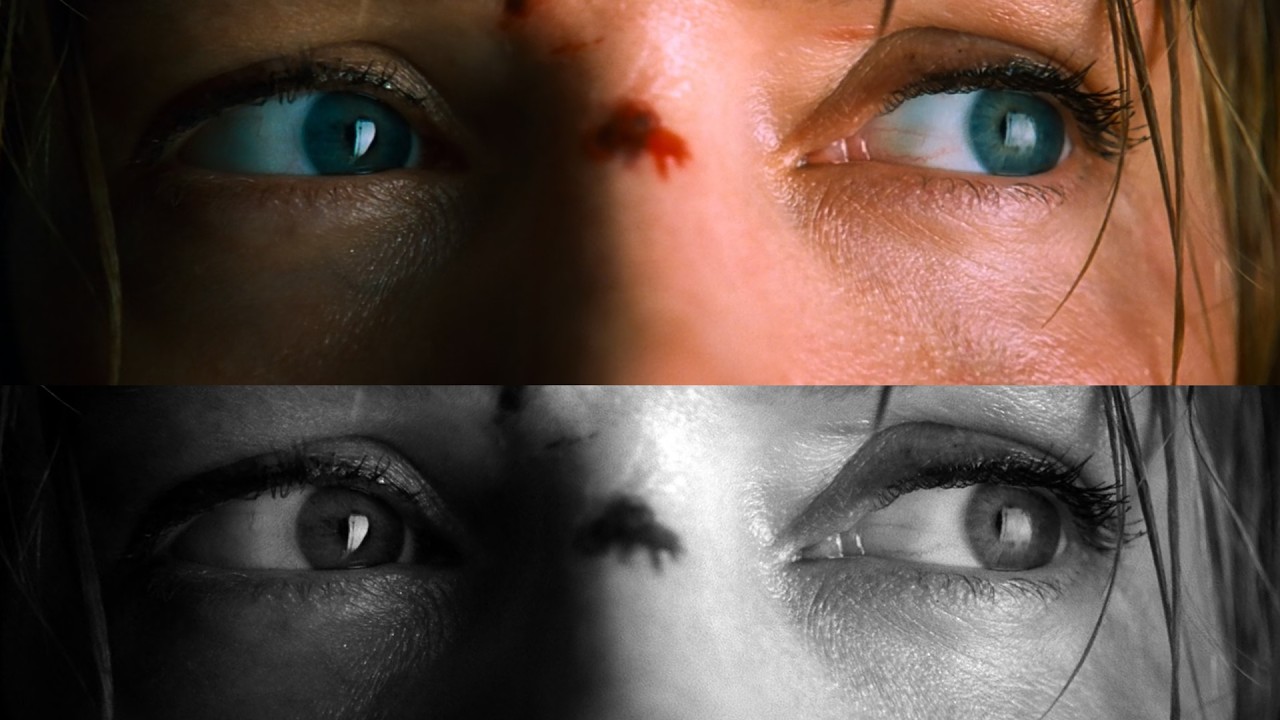
What can I say? It was cool to see, after all these years only having a Japanese dvd, the fight with the crazy 88 -in full colour and not going to black and white- in much better quality.
But… that is almost the only plus…
You also get an extra five minutes or so of the animated stuff, but that was not realy necessary.
And futher on… nothing different, no other editing or editing out a few superfluous scenes.
The only difference is you are missing the clliffhanger at the end of the first part asked by Carradine and than instead of the closing credits you get the words “intermission” while hearing James Last… eh.. I mean Gheorghe Zamfir (saying it is James Last is not cool enough for Tarantino, but we all know way better ofcourse!) and than you have to switch from disc one to disc two so not much different than watching the seperate movies after each other. Ofcourse with the second half you don’t get again opening titles but the rest is the same.
I realy expected some more difference than this. Mabye different editing or some surprises, but non of that!
4 Likes
The Odyssey (2026)
Matt Damon, Anne Hathaway
Directed by Christopher Nolan
It’s been hit or miss for me on Nolan for most of his career. I generally prefer his earlier films like Insomnia and The Prestige to his more overt blockbuster-style entries. That said, his take on The Odyssey, a film that in some ways tries to have one foot in both camps, is a tremendously good film. Does it take liberties with its source material? Sure, most adaptations do. But Nolan does so in a way that services the film that he was trying to make, a modern-ish retelling of a story that generations have been have been told and have studied over the past 3,000 or however many years it’s been.
The real star of The Odyssey appears nowhere on any of the posters for the film, and that is Hoyte van Hoytema. Even on the comparatively small screen that I saw the film on, The Odyssey looks fantastic. It was something that I had a hard time really noticing during the first half hour or so, with the disjointed and seemingly aimless opening to the film, which was the only real major issue that I have with the film. However, once Matt Damon and company stepped foot onto the Cyclops’ island, I remember there being a moment where I thought to myself, “This movie looks fantastic”. The island, as well as the cave itself, looked just about like what I’d imagined it to look like when I’ve previously read The Odyssey. I had been critical of Hoytema’s work on Spectre a decade ago, mainly down to that awful mustard filter the whole film seems to be covered with, but he’s working on an entirely different level here. And, if it looked that good on the tiny screen that I saw it on, I can only imagine how awesome it must look on one of those super-duper 70mm IMAX screens.
For all of the criticisms of the casting of the film, I can’t say that I share those concerns or issues with the film. For the spin on the story that Nolan is going for here, the actors do a tremendous job of bringing those characters to life. This is especially true in the case of many of the more supporting characters in the film. John Leguizamo, in particular, does absolutely tremendous work as Eumaeus. As good as the other actors in the film are, I felt like he was working on an even higher level, even with the relatively sparse screen time he has throughout the three hour runtime. Leguizamo absolutely should have his name called when it comes time to announce the nominees for Best Supporting Actor. The same could be said for Himesh Patel and Samantha Morton, who are both great as Eurylochus and Circe, respectively.
An interesting thing that the film does it to almost completely sideline the Greek gods. In the end, I think that actually works in the film’s favor, even though it was something that, when I heard it was the direction that they were taking had me a bit weary of what that might look like, but for the spin on the story that Nolan is going for, I think it absolutely works. They name drop the Gods quite a bit, especially with all of the talk of having angered Poseidon for the wounding of the Cyclops, and I think that this is sufficient in getting that part of the story across that part of Odysseus’ issues with getting home stem from his angering of the gods and, namely, Poseidon.
This lack of screen time for the gods, however, led to one of my favorite things that the film does. I really like what they did with Athena in the story, and Zendaya plays her wonderfully. How they tied her into the story and, more specifically, the sacking of Troy really worked within the confines of the story. When they bring that moment back at the end of the film and we get that moment where the “twist” of what they’re going for with Athena is revealed, I thought it was an incredible moment in the film. I thought that Zendaya’s performance in that one singular moment was one of the best acted moments of the film, with it being a gut-wrenching moment that hit me harder emotionally than I ever thought it would, even knowing a bit about what to expect out of what her character was meant to be going into the film.
The rest of the cast is about what you would expect, which is a good thing. Matt Damon carries the film quite capably as Odysseus, with his performance and Nolan’s writing giving the viewer a more contemporary take on the character. Anne Hathaway is great, as always, as Penelope. Tom Holland was interesting, I thought, as Telemachus. I started off not really caring for what he was doing with the character, as the performance seemed a bit unsure, but as the film goes, he really grew on me and I realized that this was exactly the point of what they were going for with him.
As an adaptation of The Odyssey, people can (and will) argue over its merits and how closely (or not) it adheres to the source material. At the end of the day, however, it is an adaptation that decides to go in different directions at times. These changes, ultimately, I think make for a strong film. That’s not to say that a completely faithful adaptation couldn’t be equally as good, because it absolutely could, but on its own as its own thing, Nolan’s The Odyssey is absolutely compelling. The various set pieces that we get from the novel, from the Cyclops to Circe’s Island to Scylla and Charybdis, the trip to Hades, and the finale in Ithaca, it’s all quite thrilling and surprisingly fast paced for a film that clocks in at three hours. I usually have a bit of trouble sitting through films of that length, but didn’t find myself bored at all during The Odyssey. And with the film, Nolan continues his domination of the entertainment industry that he shows no signs of relinquishing anytime soon. He mentioned that it was only after the success of Oppenheimer that he felt that he could get a studio to financially back an adaptation of The Odyssey. Now that he’s turned an adaptation of a 3,000 year old poem into a massive box office hit, one can only wonder what kind of project he’ll manage to get a studio to finance when he sets out to make his next film.
9 Likes
Awesome write up!
2 Likes
I still prefer the individual volumes that were originally released in cinemas. As you say, the Crazy 88 fight in colour is a positive, but I still don’t mind the black and white version even if it’s due to censorship of blood. It’s an arty Tarantino type filter that doesn’t feel out of place. I don’t really care about the extended animation segment. The ending of Volume 1 is great, so I don’t like cutting that. But I also understand why it was for the new release.
4 Likes
Well for me it was a little different. When years ago I first heard of a different Japanese version I was very curious about it and when I saw a Japanese dvd on a movie fair here in The Netherlands I bought it and I thought it was great. I realy hated that Tarantino did some self-censorship with that fight. Since then, almost twenty years ago, I never watched the normal regular international version and that was also the reason I didn’t buy the movie on blu ray because even in Japan you only could buy the international version on blu ray. Don’t know why, maybe because otherwise nobody would be that interested in TWBA version when it would eventually be released?
The animated segment I thought was ok, but I never realy found it that great or even really necessary; I would have been more inclined to cut it for this new version than to add an extra scene. The other characters aren’t given such extensive backstories either; we actually don’t even know much about the past of The Bride, for that matter.
What increasingly bothers me about Tarantino films is the use of music from other movies. As long as you aren’t familiar with those films—or have seen them but don’t clearly remember the music—it’s not a big deal; however, once for example you’ve become a serious Spaghetti Western fan (like I have), it becomes very distracting to constantly hear music from scenes from other movies—scenes that are actually far superior or cooler than the ones where the music is being used now.
3 Likes
What music from which films before Django Unchained you mean?
It is too much to mention all, but his movies are full of them.
Take Kill Bill, And I’m just doing this off the top of my head—whatever comes to mind right now—but there are surely more:
“The Good, The Bad and The Ugly” the music of Van Cleef’s introduction, “The Strenght” before the wedding rehearsal.
“A Fistfull of Dollars” the main theme I think also somewhere at the beginning at vol.2
“Il Mercenario” at least the music of the final shoot-out L’ Arena when she tries to break the wood of the coffin, but I think I was hearing more from this movie somewhere
“Navajo Joe” when Carradine does his last five steps, but also before the fight in the camper between Beatrix and Elle you hear “A Silhout of Doom” from the same movie.
“Death Rides a Horse” just when Beatrix has Sophie’s arm cut off and waits for the crazy 88
But in “Inglourious Basterds” there is also a lot Morricone
the openingscene is the shoot out of La Reisa dei Conti based on Fur Elise from Beethoven
there is also some stuff of Il Mercenario and also non Spaghetti Western music from Revolver the Italian Euro Crime movie with Oliver Reed and Fabio Testi (very good movie) or Aligiers, but I saw that movie not very recent so I don’t remember everything.
4 Likes
Ah, o.k.  I was thinking about songs and couldn´t remember something…
2 Likes
Hum… there are more differences between the original versions and the new one than I thought:
3 Likes
Somehow I never got through the 1967 version of CR…
… but the time has come to give it another shot.
I feel like I‘m going to enjoy it this time.
So, be warned. I will soon review it.
5 Likes
Good luck.
2 Likes
Im up to that point in my watchthrough, who is going to get to the pai..
Experience…
first?
3 Likes
A reminder… 
Also works without the YOLT part 
6 Likes
Mother Mary (2026)
Anne Hathaway, Michaela Coel
Dir. David Lowery
Mother Mary is the story of Mary (Anne Hathaway), a pop star that is attempting a comeback and needs a new dress to wear when she goes on stage to perform the new song that she has written for the comeback performance. This leads her to the English countryside and to the home of Sam (Michaela Cole), her former costume designer who we find out was instrumental in the design of the stage persona that is Mother Mary, a look which has traces of Taylor Swift and Lady Gaga rolled up into some fairly vague quasi-religious imagery.
To say that the reception Mary receives when she arrives at Sam’s door is icy is an understatement. What progresses from here is really a stage play, with the two characters spending a good portion of the runtime simply having a conversation. Through it, we learn about the relationship between the two characters, the nature of which is somewhat ambiguous and left open to how the viewer interprets the dynamic between Mary and Sam, and also how things fell apart for them. This takes up a big chunk of the film and, while it doesn’t necessarily sound exciting on paper, the performances of Hathaway and Coel really sell it. Coel’s line delivery as well as her piercing stare right through the camera really sell the story of a woman who has been deeply hurt by someone that she was very much invested in and very much cared for. It’s a haunting performance that carries the film when there’s otherwise not a lot going on in the film in terms of motion or action. Hathaway is, as always, quite good as well, conveying a conflicted character who is trying to navigate her grief, shame, desperation, and ultimately remorse for what has gone on over the past several years that has led both women to the point that they find themselves in at the start of the film.
Mother Mary was hinted at as being a horror film. There are horror elements as you get further into the film, which leads to some striking visuals but the film is never really scary or even unnerving, but I don’t get the sense that this was the point of the film in the first place. The visuals in the film, however, are often striking, which is a testament to how director David Lowery shifts scenes within the barn house (which operates as Sam’s workshop), using lighting techniques similar to what you might see in a stage play to reveal previously hidden portions of the set. This is interspersed with concert footage featuring Mother Mary. These are also a highlight, with the visuals providing a nice change from the barn house as well as Hathaway really flexing her singing ability here, delivering performances that make her entirely believable as a world famous poster.
It’s a film that I find hard to say whether I liked or not. If you like stage plays and/or are a fan of films that in no way hold your hand and explain things to you, you might find value in this film. I certainly appreciate it for those things as well as the acting from Hathaway and Coel, who are both exceptional in the film. What can be said for the film, though, is that it’s one that sticks with you after it’s over. It partially sticks with you because you spend a good deal of time trying to wrap your head around what it was that you actually just saw, but even beyond that, the themes that the film explores and the visuals that it deploys are enough to stay with you.
4 Likes
The Best Years of Our Lives (1946 classic directed by William Wyler, starring Dana Andrews, Teresa Wright, Myrna Loy, Fredric March, Harold Russell and Virginia Mayo): Given how well known this film is, I’m surprised that I’d never seen it before. I’m sure it’s part of Turner Classic Movies’ regular rotation. My husband noticed it in the TCM schedule back in May and recorded it. We finally got around to watching it last night.
The Best Years of Our Lives addresses the traumatic challenges of U.S. servicemen returning home from World War II and, I have read, was one of the earliest films to portray PTSD. All of the performances are impressive, but Myrna Loy stood out to both of us for the deft touch she took with her role as Milly, endlessly understanding wife of Fredric March’s Al.
But without a doubt, the standout is Harold Russell, a real-life bilateral hand amputee in his first acting role. Nothing about his performance is mannered, which is why it feels so real. He simply is his character, Homer Parrish, who lost both hands during the war. When he can finally wrap his arms around his girlfriend, Wilma (beautifully played by Cathy O’Donnell), it’s an emotionally compelling moment that almost overpowers everything else. But this is a stellar ensemble cast, all of whom balance one another out with memorable performances.
I was also impressed by the lengths to which William Wyler went to ensure a natural impression of the characters and locations, starting with the casting of Russell, but continuing with wardrobe and set design. (Apparently he asked his principal cast to buy their own clothes in order to gain a sense of authenticity with their characters, and he had life-size sets constructed, rather than the usual larger sets designed to accommodate camera positions.)
Also, cinematographer Gregg Toland utilized deep focus photography (which he also used in Citizen Kane and The Grapes of Wrath) to keep subjects in the foreground and background in sharp focus. All of this contributed to an engaging film that exposed me to the characters’ emotions without lecturing or overstating what they were going through.
The one exception was Virginia Mayo’s (in my opinion) disposable character, Marie. She felt like an all-too-obvious plot device giving Teresa Wright’s Peggy a reason to go after Dana Andrews’ Fred, but she was a little too “on the nose” for my tastes, as a cardboard-cutout vamp who stole too much screen time. (Not Mayo’s fault, though. I’m sure she played her character as written.) That’s my only complaint about an otherwise brilliant movie.
4 Likes
The “In-Laws” (US-1979) from director Arthur Hiller with Peter Falk and Alan Arkin.
I first saw this movie as one ot the night movies on Dutch television in the eighties.
That was a big thing in The Netherlands, we only had two channels and they stopped around 23.30. So when we got on Friday and Saturday a movie, after the normal closing time, was for a young film enthusiast fantastic. I saw movies which still are my favorites today like Charade, The Deserter (spaghetti western), House of Wax (with Vincent Price), Wait Until Dark, Le Clans des Siciliens, L’ Homme de Rio etc.
But that’s how I first also saw this movie. I remember I find it then so funny that I fell of the couch from laughing. This never happened again when I saw it again, but still it is and stays a very, very funny movie.
Director Hiller made ofcourse more movies then this one, but when people, or fans came to him and wanted to talk about one of his movies it was always this one!
It is a very strange, absurd comedy. Arkin is the father of the bride and when the new in-laws come visting his house, to meet the parents of the bride, the man, played by Falk, comes across as a somewhat odd, shady character who claims to work for the government; he even disappears for minutes at a time to make a phone call in the basement. He makes strange, inappropriate remarks and spins a very bizarre, implausible tale about a time he was in the jungle on an assignment, claiming that giant flies would swoop in at night, snatch up babies, and carry them off into the jungle.
So Arkin, who is a dentist, thinks this is not good at all and wants to call off the wedding, but his wife and daughter—thinking Falk was simply nervous—ask him to give the man another chance; he agrees, but the very next day, an enthusiastic Falk shows up at his clinic and drags him into a wild espionage adventure. This includes the craziest car chase ever and a trip to some South America country featuring a general who has drawn a face on his hand and pretends it is a real person. It is one of the funniest films I know and still well worth watching. The Criterion Blu-ray is highly recommended.
4 Likes